DRAM is one of those semiconductor terms that investors hear often but do not always define clearly. It sounds technical, but the business logic is simple: modern computing needs fast working memory. Phones, laptops, cloud servers, graphics processors, and AI systems all need DRAM to hold data while chips are actively processing it. When the world builds more AI servers and high-performance computers, the DRAM market becomes harder to ignore.
What Is DRAM?
DRAM stands for dynamic random access memory. In plain English, it is short-term, high-speed memory used by processors to keep active data close at hand. Storage such as SSDs keeps files when the device is off. DRAM is different. It is faster, more expensive per bit, and volatile, meaning it loses data when power is removed.
That speed is why DRAM matters. A powerful CPU or GPU cannot do much if it waits too long for data. In AI servers, memory bandwidth can become a bottleneck. That is one reason high-bandwidth memory, or HBM, has become so important. HBM is a specialized form of DRAM stacked close to advanced processors to move data quickly for AI training and inference workloads.
Why DRAM Has Become an AI Keyword
The old DRAM story was mostly about PCs, smartphones, and data centers. Those markets still matter, but AI has changed the mix. AI accelerators need huge amounts of memory bandwidth, and server platforms are moving toward higher-capacity DDR5 modules and HBM. TrendForce has highlighted that HBM demand can compete for production capacity that would otherwise support conventional server DRAM. That creates a different supply-demand picture than a normal PC replacement cycle.
For investors, the key point is not simply that AI is good for DRAM. The better question is whether demand is rising faster than supply, and whether pricing power is strong enough to lift margins. DRAM companies can report excellent revenue growth during tight supply, then face sharp profit pressure when new capacity arrives or customers cut inventory.
The DRAM Business Is Cyclical
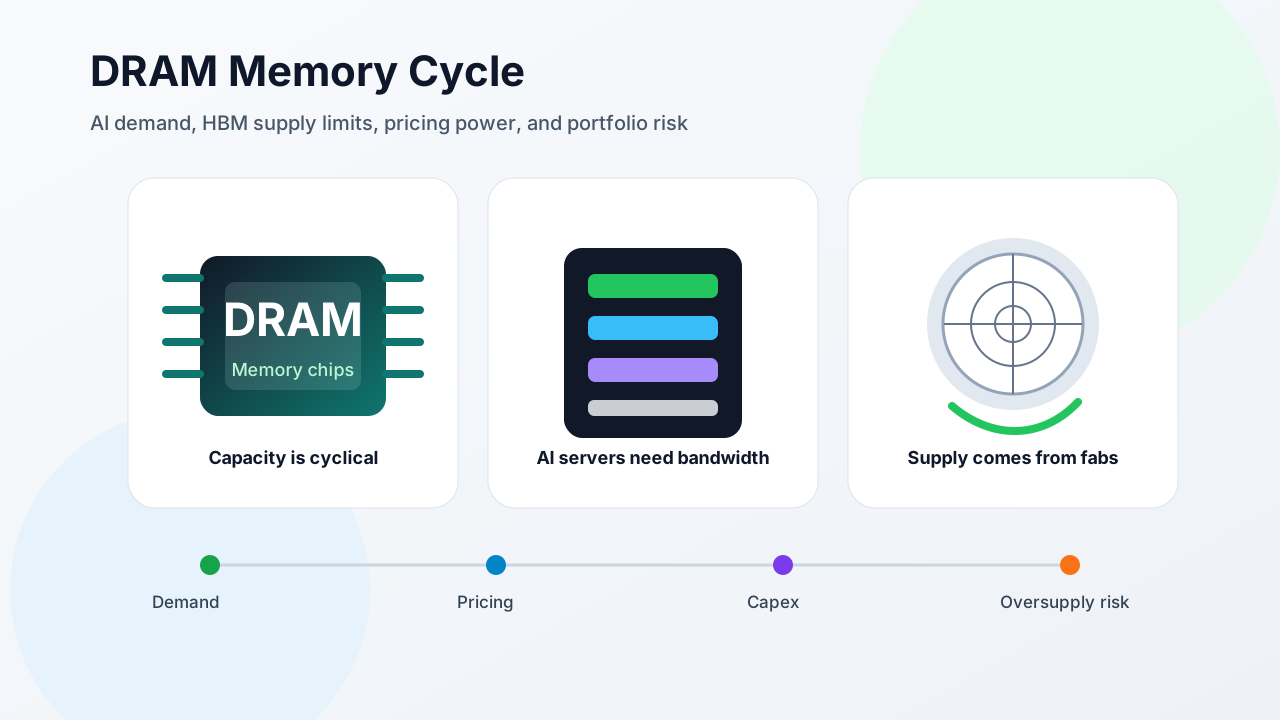
DRAM is not a steady software subscription business. It is a capital-intensive commodity-like semiconductor market. Factories cost billions of dollars. Supply takes time to build. Customers often order aggressively when they fear shortages and then slow purchases when they have too much inventory. That produces cycles.
- Upcycle: demand improves, inventories fall, contract prices rise, and producer margins expand.
- Peak risk: stock prices may already discount strong pricing, while companies announce more capital spending.
- Downcycle: supply catches up, customers digest inventory, prices fall, and earnings can drop quickly.
- Recovery: weaker pricing forces supply discipline, demand gradually improves, and the next cycle starts.
This is why DRAM stock charts can look exciting and uncomfortable at the same time. The market often moves before reported earnings look good. By the time financial statements show peak profitability, the equity market may already be asking whether the next downturn is closer.
Who Are the Major DRAM Players?
The DRAM market is concentrated around a few large suppliers, especially Samsung Electronics, SK hynix, and Micron Technology. Each has different exposure by product type, geography, customer base, capital spending, and technology roadmap. Investors who buy individual memory stocks should watch gross margin, inventory levels, bit shipment growth, average selling prices, HBM qualification progress, and customer concentration.
Micron's fiscal 2026 first-quarter results showed how strong AI-related memory demand can flow through a business when the cycle is favorable. But one strong quarter does not remove cyclicality. It only confirms that the current cycle needs to be analyzed with both demand growth and supply discipline in mind.
How Investors Can Get DRAM Exposure
There is no single perfect way to invest in DRAM. The right structure depends on whether you want direct memory-cycle exposure or broader semiconductor participation.
| Approach | What You Get | Main Risk |
|---|---|---|
| Individual DRAM stocks | Direct exposure to memory pricing, HBM growth, and company execution | High earnings volatility and company-specific risk |
| Semiconductor ETFs | Diversified chip exposure that may include memory, AI, equipment, and design leaders | Less pure DRAM exposure and broad sector valuation risk |
| Leveraged semiconductor ETFs | Amplified short-term exposure to the semiconductor theme | Daily reset, path dependency, and large drawdown risk |
| Broad market ETFs | Indirect exposure through large technology and semiconductor holdings | DRAM impact may be diluted |
Portfolio Positioning: Core vs Satellite
For most investors, DRAM exposure works better as a satellite position than a portfolio core. A broad equity ETF can remain the base. A semiconductor ETF can serve as a thematic layer. Individual DRAM stocks, if used at all, should be sized with the understanding that earnings can swing sharply through the cycle.
A conservative investor might keep DRAM exposure inside a diversified semiconductor ETF. A more aggressive investor might combine a semiconductor ETF with a small memory-stock position. A trader may use leveraged products, but those are tools for short holding periods and strict risk control, not quiet long-term compounding vehicles.
Risk Checklist Before Buying DRAM Exposure
- Pricing risk: DRAM prices can fall faster than revenue forecasts imply.
- Capex risk: industry expansion can create future oversupply.
- Inventory risk: customers may pause orders after building too much stock.
- Technology risk: HBM, DDR5, and process transitions require heavy investment and flawless execution.
- Geopolitical risk: memory supply chains touch South Korea, Taiwan, Japan, China, the United States, and other regions.
- ETF risk: a semiconductor ETF may not move exactly like the DRAM theme you expect because holdings and weights differ.
Bottom Line
DRAM is a real investment theme because AI servers, HBM, and data-center growth have changed the memory demand story. But DRAM is still cyclical. The opportunity comes from understanding both sides: the long-term need for faster memory and the short-term risk of pricing, inventory, and capital spending. For ETF investors, the cleanest starting point is to compare semiconductor ETFs, check holdings, review volatility, and size the position so one memory cycle does not dominate the whole portfolio.
Sources and Methodology
This article uses public industry research, company reports, and ETF analysis principles. DRAM pricing, supply, demand, ETF holdings, and stock valuations change quickly, so investors should verify current data before acting.
- Gartner semiconductor and memory revenue forecast
- TrendForce DRAM and HBM supply-demand commentary
- Micron fiscal 2026 first-quarter results
- SEMI 2026 semiconductor manufacturing outlook
Educational use only. ETFSift does not provide personalized investment, tax, legal, or financial advice.