
DRAM storage has moved from the back of the semiconductor conversation to the center of the AI infrastructure debate. Investors used to ask whether PC and smartphone demand was improving. Now they also ask whether AI data centers can absorb enough HBM and high-capacity server DRAM to keep memory pricing strong. That is a better question, but it still needs a disciplined answer.
The New DRAM Demand Stack
DRAM demand is no longer one market. It is a stack of end markets with different growth rates and different margins. Consumer electronics can be soft while AI servers remain strong. Mobile DRAM can recover slowly while HBM sells into a tight supply chain. That is why headline memory revenue can improve even when parts of the old cycle still feel uneven.
- AI and cloud servers: need DDR5, high-capacity modules, and HBM for bandwidth-intensive workloads.
- PCs and notebooks: still matter, but replacement cycles are slower and more price sensitive.
- Smartphones: drive volume, yet demand depends on upgrade cycles and consumer spending.
- Automotive and edge devices: smaller today than servers and mobile, but long-term memory intensity is rising.
Gartner's 2026 semiconductor outlook points to strong memory growth as AI infrastructure expands. SEMI also expects DRAM equipment investment to rise as manufacturers support HBM demand, process migration, and DDR5. These are positive signals, but they also reveal the core risk: high demand eventually attracts high investment.
HBM Is Not Just Another Memory Product
HBM matters because AI processors need extremely fast access to data. Traditional DRAM modules are still important, but HBM packages memory closer to the compute engine and delivers much higher bandwidth. The result is a more specialized, capacity-constrained product line with higher technical barriers.
For investors, HBM can improve the quality of memory revenue because it is more advanced and often tied to strategic AI customers. But it also raises execution risk. Suppliers must qualify products with demanding customers, secure advanced packaging capacity, and manage expensive transitions. A company can be right on the DRAM cycle but wrong on the timing of HBM customer adoption.
How to Read DRAM News Without Overreacting
DRAM headlines can be noisy. A price increase, a large AI order, or a bullish analyst note can move sentiment quickly. Instead of reacting to every headline, investors can use a simple four-part checklist.
- Demand: Are server, AI, PC, and smartphone customers actually increasing orders?
- Inventory: Are customers buying for real consumption or rebuilding safety stock?
- Supply: Are producers staying disciplined, or is capex accelerating too quickly?
- Valuation: Does the stock or ETF already price in a strong memory cycle?
The fourth point is where many investors get hurt. A good industry can still be a bad trade if expectations are already extreme. DRAM-related assets often re-rate before earnings peak, so investors should compare the upside story with drawdown risk.
Three DRAM Allocation Styles
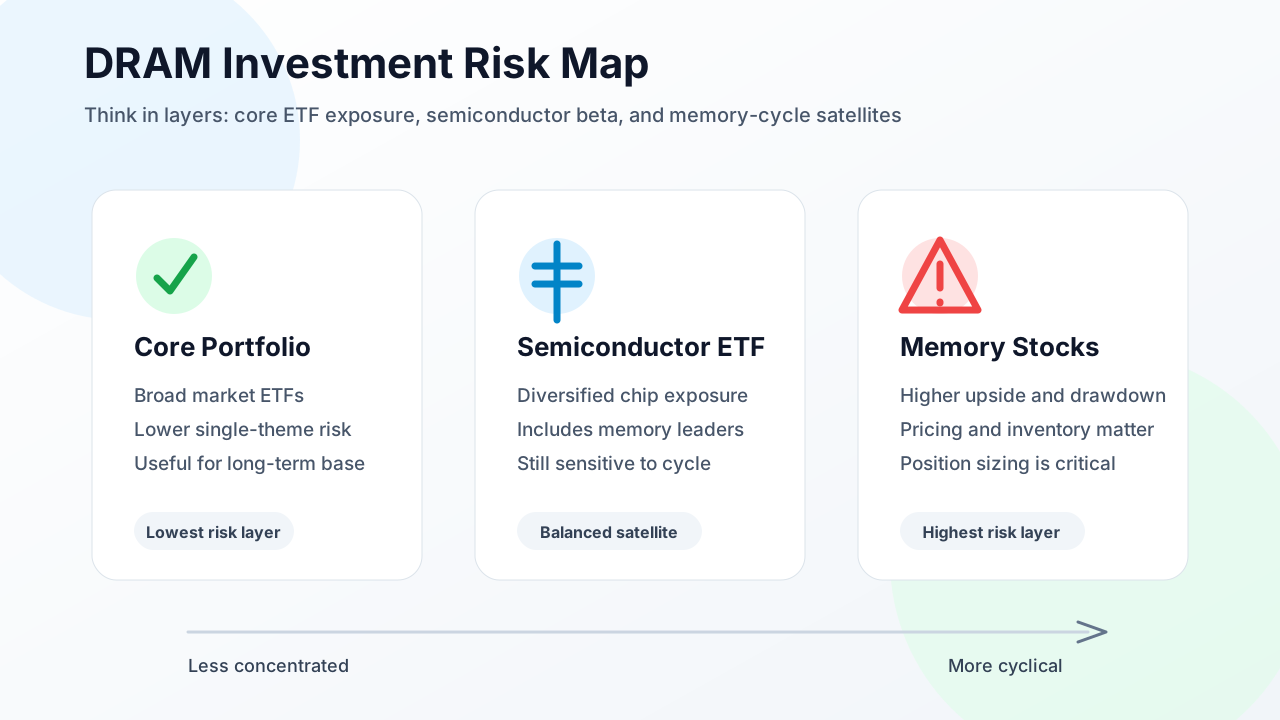
There is no universal DRAM allocation. The right exposure depends on age, income stability, risk tolerance, and whether the investor already owns technology-heavy ETFs.
| Investor Type | Possible Structure | Why It May Fit |
|---|---|---|
| Conservative | Broad market ETF core plus small semiconductor ETF exposure | Gets AI and chip exposure without relying on one memory cycle |
| Balanced | Core index ETFs, semiconductor ETF satellite, small DRAM stock watchlist | Allows participation while keeping single-stock risk controlled |
| Aggressive | Semiconductor ETF plus selected memory stocks, strict position limits | Targets higher upside but accepts larger drawdowns and timing risk |
Leveraged semiconductor ETFs deserve special caution. They can be useful for short-term tactical trades, but daily reset mechanics can erode returns in volatile sideways markets. They are not a substitute for long-term DRAM research.
DRAM vs Semiconductor ETF: Which Is Cleaner?
Individual memory stocks give cleaner DRAM exposure, but the word cleaner does not mean safer. A semiconductor ETF may hold memory companies, AI chip designers, foundries, equipment makers, and analog chip firms. That diversification can reduce company-specific risk, though it also means the ETF may rise or fall for reasons unrelated to DRAM pricing.
A practical approach is to use ETFSift to compare semiconductor ETFs by expense ratio, assets under management, dividend yield, one-year return, volatility, and holdings. Then ask a simple question: do I want a broad semiconductor bet, or do I want a direct memory-cycle bet? Many investors discover that the broad ETF fits their portfolio better.
Risk Management Rules That Matter
- Cap the theme: decide the maximum percentage of the portfolio that can be tied to DRAM or semiconductors.
- Separate trade from investment: leveraged ETFs and short-term cycle trades need different rules than long-term holdings.
- Rebalance after strong runs: memory stocks can become too large after an upcycle.
- Watch customer concentration: AI demand is powerful, but dependence on a few large customers can create volatility.
- Respect currency and geography: many leading memory businesses report and operate outside the United States.
What Would Change the Bull Case?
The DRAM bull case weakens if AI server demand slows, HBM supply becomes abundant faster than expected, PC and smartphone recovery disappoints, or producers overspend on new capacity. It can also weaken if stock prices rise far faster than earnings revisions. A strong market does not eliminate the need for valuation discipline.
Bottom Line
DRAM storage deserves investor attention because AI infrastructure has made memory bandwidth a strategic bottleneck. HBM and DDR5 can support a stronger memory cycle, but the same cycle can reverse when supply expands and inventories normalize. Investors do not need to guess perfectly. They need a clear exposure choice, a position size that matches the risk, and a process for comparing DRAM-related stocks and semiconductor ETFs before committing capital.
Sources and Methodology
This article uses public industry research, company reports, and ETF analysis principles. DRAM pricing, supply, demand, ETF holdings, and stock valuations change quickly, so investors should verify current data before acting.
- Gartner semiconductor and memory revenue forecast
- TrendForce DRAM and HBM supply-demand commentary
- Micron fiscal 2026 first-quarter results
- SEMI 2026 semiconductor manufacturing outlook
Educational use only. ETFSift does not provide personalized investment, tax, legal, or financial advice.